
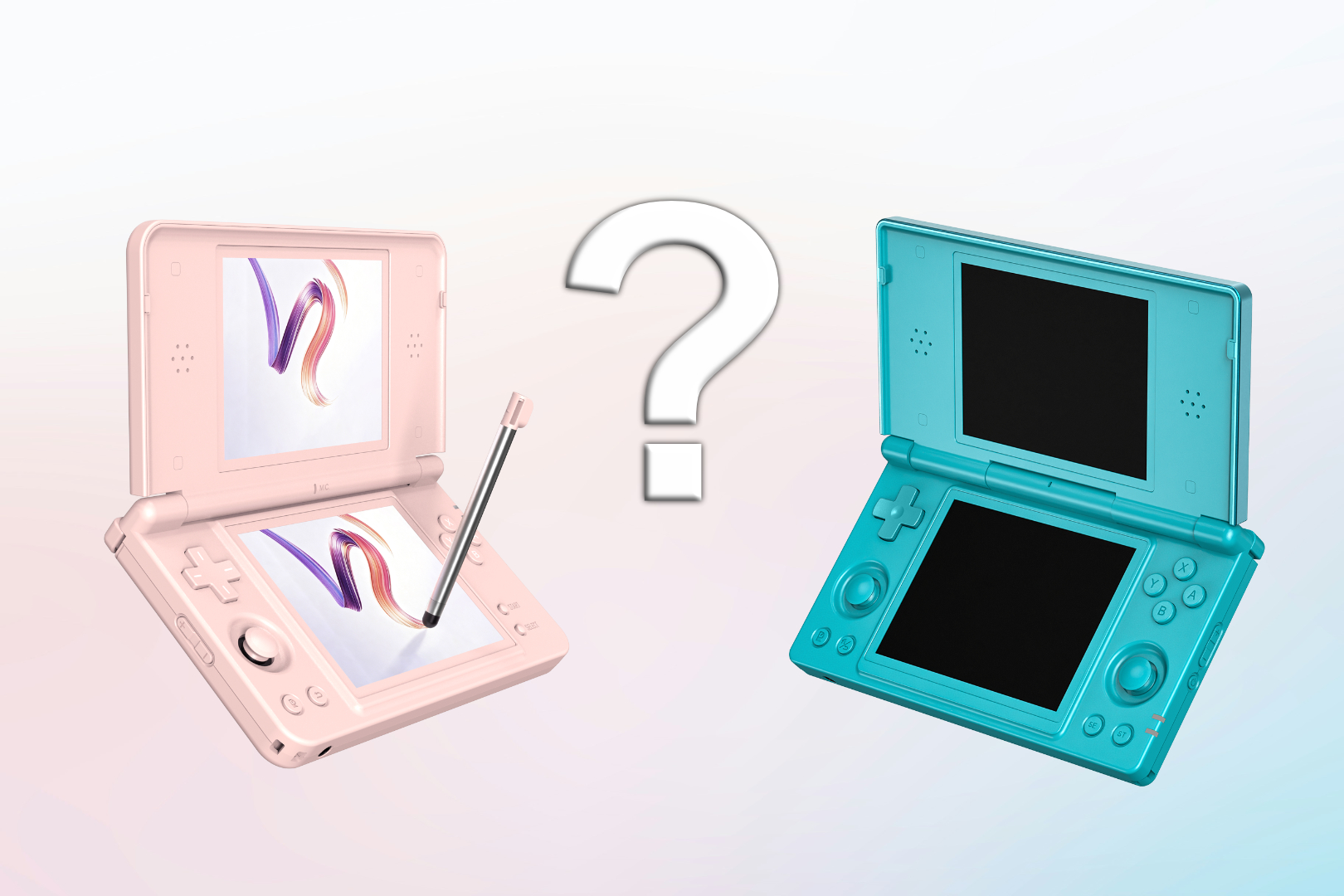
If you expect the Anbernic RG DS Plus to run more demanding systems, keep your wallet closed. Both handhelds use the exact same budget Rockchip RK3568 processor. The Plus is not a performance upgrade; it is Anbernic’s overhaul of the original RG DS’s biggest design flaws.
The original RG DS made dual-screen clamshell gaming accessible under $100, but it cut corners with blurry non-integer scaling, sluggish Android software, and a redundant right analog stick. At $84.99 on pre-order ($10 off retail until September 18), the RG DS Plus costs roughly what the original sells for today while swapping those compromises for pixel-perfect screens, streamlined Linux firmware, and physical refinements.

ANBERNIC RG DS Plus
| 16G | $94.99 | ● |
| 16G+64G | $109.99 | ● |
| 16G+128G | $124.99 | ● |
Get alerts for
We'll email you when this product drops in price or comes back in stock.
You're signed up!
Error. Try again.

ANBERNIC RG DS
| Default | $94.99 $99.99 | ● |
| +128G | $119.99 $124.99 | ○ |
| +256G | $139.99 $154.99 | ○ |
| +64G(Linux) | $109.99 $114.99 | ● |
| +64G(Linux)+128G | $139.99 $144.99 | ● |
| +64G(Linux)+256G | $159.99 $164.99 | ● |
Display: Integer Scaling vs. Blurry 480p
The real day-to-day upgrade is screen clarity. The original Nintendo DS outputs at 256x192 pixels per screen:
- Original RG DS (640x480): Forces an awkward 2.5x scaling factor. Because pixels cannot be split, interpolation creates soft text in RPGs, fuzzy UI icons, and visible shimmering whenever the camera pans.
- RG DS Plus (1024x768): Delivers a clean 4.0x integer scale. Every original pixel maps to a crisp 4x4 block, completely eliminating blur, color bleed, and scaling shimmer. The panel is also slightly larger at 4.3 inches (up from 4.0 inches), improving text readability without adding bulk.
Anbernic also removed the touchscreen layer from the top display, leaving capacitive touch exclusively on the lower panel. This mirrors native Nintendo DS hardware, strips away a layer of glare-inducing glass to improve viewing angles, and reduces top lid wobble.
Hardware & Ergonomics: Practical Clamshell Fixes
The Plus redesign fixes several physical annoyances of the first generation:
- Integrated Stylus Silo: Replaces the loose stylus of the original with a built-in chassis silo on the lower right. The included aluminum stylus features a soft rubber capacitive tip.
- Removed Right Analog Stick: DS titles do not utilize dual sticks. Removing the secondary stick gives your right thumb comfortable clearance under the face buttons.
- Continuous Friction Hinge: Replaces the rigid two-stop hinge (120° and 180°) with a smooth friction hinge that holds steady at any angle between 15° and 180°, making it easy to eliminate glare.
- Clicky Micro-Switches: Swaps out the soft conductive rubber membranes for crisp, tactile metal-dome switches similar to a Game Boy Advance SP.
- Front-Facing Audio: Reroutes the stereo speakers from the lower palm grips to the front bevel, preventing your hands from muffling sound during play.
Software: Plug-and-Play Linux vs. Android Tinkering
- RG DS Plus: Drops RAM to 1GB and runs a lightweight, dedicated Linux setup (NNDDSS). It boots instantly and supports essential dual-screen shortcuts out of the box: instant screen swapping, independent display dimming, low-latency mic input, and real-time clock support. However, the 1GB RAM cap permanently rules out Android or Android-native source ports.
- Original RG DS: Includes 3GB of RAM and dual-boots Android 14 and Linux. While clunky out of the box, it supports custom community firmware like GammaOS (debloated Android) and ROCKNIX (dedicated Linux frontend), making it the better choice if you want background cloud syncing or broad firmware flexibility.
Side-by-Side Specifications
| Feature | Anbernic RG DS (Original) | Anbernic RG DS Plus |
| Displays | Dual 4.0" IPS (Both Touch) | Dual 4.3" IPS (Touch on Bottom Only) |
| Resolution | 640 x 480 (2.5x Non-Integer for DS) | 1024 x 768 (Exact 4.0x Integer for DS) |
| Processor | Rockchip RK3568 (4x A55 @ 2.0 GHz) | Rockchip RK3568 (4x A55 @ 2.0 GHz) |
| RAM | 3GB LPDDR4 | 1GB LPDDR4 |
| Operating System | Android 14 + Linux (Dual-Boot) | Linux (Dedicated NNDDSS) |
| Controls | Dual Sticks + Rubber Membrane | Single Left Stick + Micro-Switches |
| Audio | Down-Firing Stereo | Front-Facing Chambered |
| Battery Life | 5,000 mAh (~5.5–6.5 Hours) | 5,000 mAh (~6.0–7.5 Hours) |
| Live Pricing | $94.99 $99.99 | $94.99 |
Emulation Expectations: The 3DS is still a non-starter
Neither handheld can emulate Nintendo 3DS games. The Rockchip RK3568 lacks the processing muscle and clock speeds for 3DS or PS2 emulation. If 3DS is your priority, look at the Retroid Pocket Duo series or the flagship AYN Thor.
For lower-demand platforms, both RG DS units perform well:
- Nintendo DS: Full-speed 60 FPS emulation with synced audio.
- GBA & 16-Bit Era: Flawless integer scaling with run-ahead latency reduction.
- PlayStation 1: Full speed at native resolution with PGXP geometry correction.
- Light N64 & Dreamcast: Lighter games like Mario Kart 64 run well, while heavier titles like Shenmue drop frames.
Because the Plus runs a leaner Linux environment, battery efficiency increases to roughly 6.0–7.5 hours of DS playback, compared to 5.5–6.5 hours on the original.
Verdict: Plus Version for DS – Original version for everything else
Buy the Anbernic RG DS Plus if:
- You want crisp DS visuals with native 4x integer scaling.
- You want an integrated stylus, clicky buttons, and an adjustable friction hinge.
- You want a dedicated gaming appliance that boots straight into your library without firmware setup.
Keep or buy the Original RG DS if:
- You want 3GB of RAM for Android-based tools, GammaOS, or Syncthing.
- You need twin analog sticks for Portmaster, PS1 or arcade mapping.
- You do not mind soft 480p scaling.
For new buyers, the RG DS Plus is the clear recommendation. At $84.99, it addresses most practical complaints of the original while perfecting the core Nintendo DS experience.