
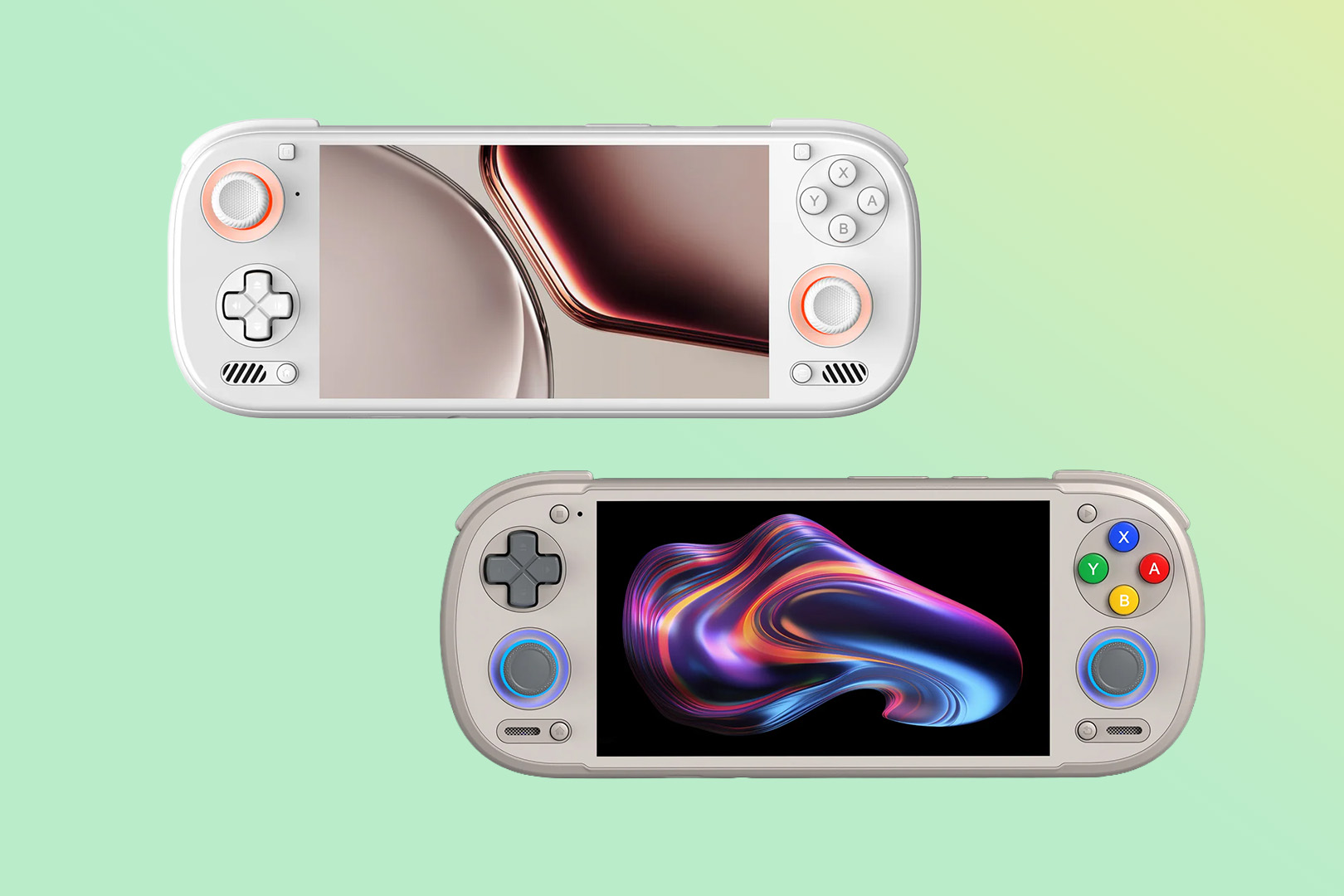
Retroid Pocket 6 vs. AYN Odin 3: Premium Power vs. Premium Price
If you’ve got the budget for a high-end handheld, you’re looking at these two. Both are flagship devices. Both cost more than most alternatives. But they’re solving different problems, and which one you pick depends entirely on what you’re actually trying to do.
The Chip: Maturity vs. Raw Power
Here’s the core difference: The RP6 has a proven chip. The Odin 3 has the most powerful chip.
The RP6 uses the Snapdragon 8 Gen 2 — the same chip that’s been in flagship Android phones for years. We know how it behaves. Community drivers (Turnip) are mature. Performance is predictable.
The Odin 3 uses the Snapdragon 8 Elite — the newer, more powerful chip. It’s faster on paper. Better efficiency. But it’s newer, which means less community optimization and fewer real-world benchmarks for handheld use specifically.
Real world impact: In most emulation, you won’t notice the difference. The Snapdragon 8 Gen 2 in the RP6 is already overkill for anything pre-Switch. For Switch and PC emulation, the Odin 3 will squeeze out a few extra frames, but driver immaturity might actually negate that advantage in edge cases.
Performance: Where It Actually Matters
Retro systems (NES, SNES, Genesis, N64, Dreamcast): Both destroy it. You’re GPU-limited by the emulator, not the hardware. Pick whichever.
PS2 & GameCube: Odin 3 pulls ahead slightly. The 8 Elite handles these better, especially at higher resolutions or with upscaling. RP6 handles them fine too, but the Odin 3 is noticeably smoother in demanding titles.
Switch emulation: RP6 wins. The mature driver support means fewer stutters and glitches. Odin 3 will get higher framerates in some games, but inconsistency is the real problem. You might get 55-60fps one moment and 40fps the next. RP6 is more stable.
PC games (GameHub, Winlator, GameNative): Odin 3 wins clearly. The extra power matters here. You’ll hit better framerates and smoother gameplay on demanding titles. This is where the Odin 3’s extra cost starts making sense.
The Price Reality
RP6 with 12GB RAM: $279
Odin 3 base: $329
That’s $50. Not huge, but worth considering in context: the RP6 does 90% of what the Odin 3 does for less money. The question is whether that 10% (extra PC game performance, slightly faster Switch emulation) is worth the premium.
If you’re mostly playing retro systems and PS2, the RP6 is the smarter buy. You’re paying for power you don’t need.
If you’re planning to use GameHub or Winlator heavily, the Odin 3 makes more sense. That PC performance gap is real.
The Features & Build
RP6 advantages:
- Charging separation (use while charging without battery wear)
- 4K output (better for TV docking)
- WiFi 7 (better for cloud streaming)
- In stock (ships next week vs. months)
- Matte finish (doesn’t attract fingerprints)
Odin 3 advantages:
- More RAM options (up to 24GB vs. 12GB max)
- Slightly better ergonomics (some say it’s more comfortable)
- Subjectively nicer color options
- The bragging rights of owning the most powerful handheld
Honestly? These are minor. The RP6’s extras (4K out, WiFi 7, charging separation) are more practically useful than anything the Odin 3 brings to the table.
Real Talk
Get the RP6 if:
- You want the best value at the premium tier
- You play mostly retro systems, PS2, or GameCube
- Switch emulation accuracy matters more than raw framerates
- You want the nicer feature set (4K, WiFi 7, charging separation)
- You don’t want to wait for availability
Get the Odin 3 if:
- You’re serious about PC emulation (GameHub, Winlator, GameNative)
- Raw power and future-proofing matter more than price
- You want the absolute fastest handheld money can buy right now
- You have specific games that need that extra performance
The verdict: The RP6 is the smarter buy for most people. The Odin 3 is the right choice if you specifically know you need PC emulation performance. Don’t buy the Odin 3 just because it’s more powerful — that’s wasted money unless you’re actually using that power. If you want to know how the RP6 stacks up against Retroid’s other powerful device we have this article.