
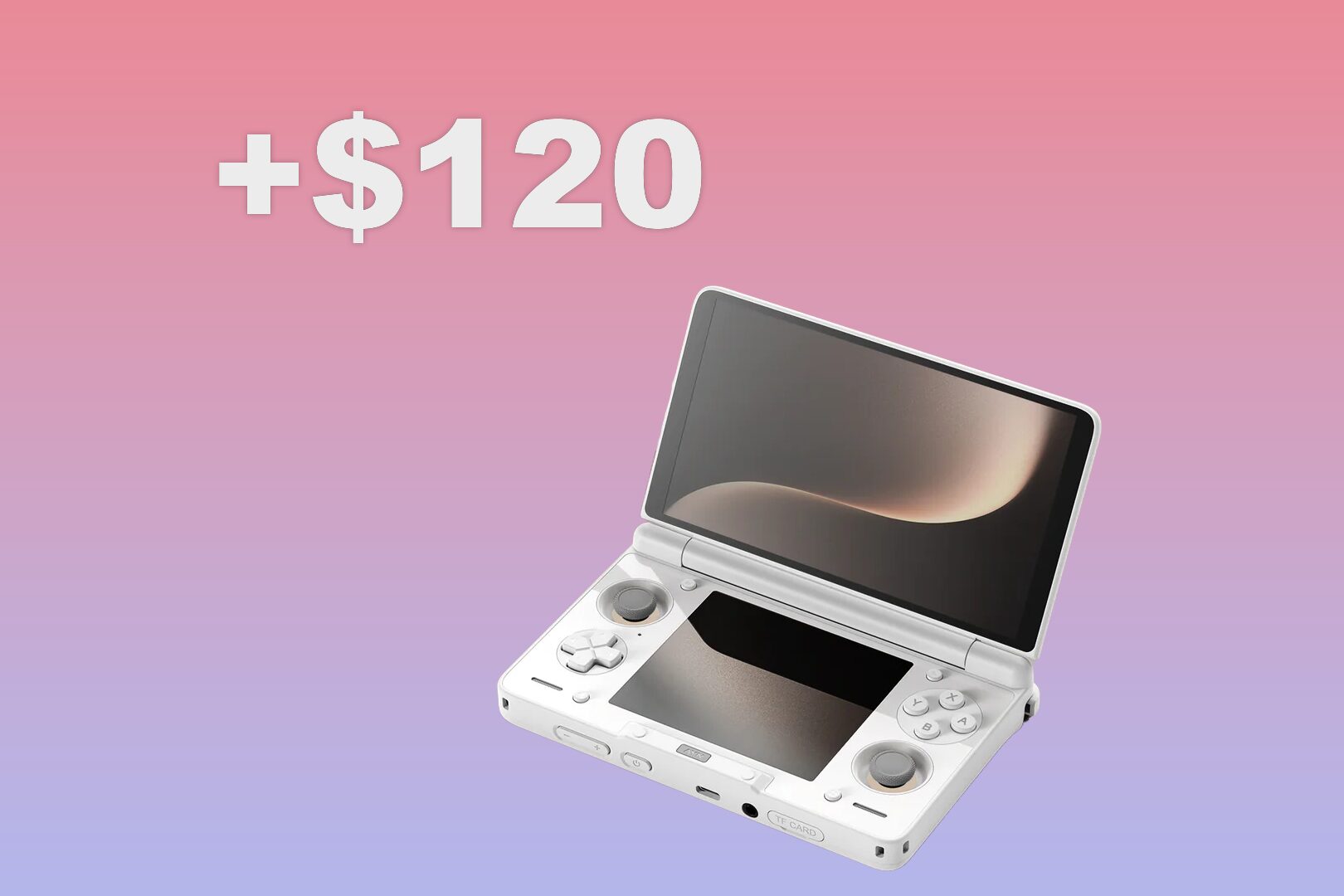
Due to the ongoing “RAMpocalypse”, an AI driven supply chain crunch gripping the tech world in 2026, the AYN Thor gets its third price hike this year, as well a downgrade. The AI boom and spending spree has massively inflated component prices, particularly for DRAM and flash storage. As a result, the tech industry is experiencing a rare regression marked by price hikes, downgrades, and discontinuations.
Among the worst afflicted companies of the retro handheld space seems to be AYN, a company normally known for great value products. And for them, their highly popular AYN Thor seems to be bearing the brunt of the shortages.
What happened to the AYN Thor?
On April 17th, AYN announced another pricing adjustment for the Thor. Though this time most configurations were spared. Only the highest-tier (16GB RAM / 1TB storage) Thor Max configuration received a hefty $60 increase, bringing it to $549. This follows earlier price jumps from $429 to $449 in January after an early end to the early bird pricing, and a further $40 later in March.
However, while the lower-tier devices avoided further price increases now in April. All of them, including the Max, still suffered a hardware downgrade. AYN stated that using UFS 4.0 storage was no longer sustainable due to skyrocketing costs. Forcing a transition to the slower UFS 3.1 standard for all upcoming batches.
To mitigate some of the damage, AYN did also introduce a new Thor configuration: a 16GB RAM model with 512GB storage for $469. While having the same amount of RAM as the Max, it sits at a price lower than the 1TB model before the hike, yet still higher than the Thor Max’s initial $429 early bird price.
The UFS Storage Downgrade: What does it mean?
The downgrade specifically targets the Thor’s internal Universal Flash Storage (UFS), a soldered-on medium that has become standard in phones and gaming handhelds due to its SSD-like speeds.
On paper, the transition from UFS 4.0 to UFS 3.1 is roughly equivalent to halving the device’s read and write speeds:
- UFS 4.0: Delivers sequential read speeds of roughly 4,200 MB/s and write speeds of 2,800 MB/s.
- UFS 3.1: Drops those figures to approximately 2,100 MB/s for reads and 1,200 MB/s for writes.
While this may sound like a lot there is a silver lining. UFS 3.1 remains a good enough standard for the job, and the impact for gaming is likely to barely be noticeable. Major rivals in the retro handheld space, like the Retroid Pocket 6, never featured UFS 4.0 to begin with, and its absence didn’t deter buyers. As far as hardware sacrifices go, this one is relatively painless.
Does the Storage Downgrade Actually Matter?
For the vast majority of gaming scenarios, these reduced speeds will be completely unnoticeable. The retro and modern systems you emulate on a handheld were never designed to utilize UFS 4.0 bandwidth.
- Retro Consoles (PS2/GameCube): The original PS2 read data from a 4x DVD drive at roughly 5.28 MB/s. Even a bottom-tier modern microSD card is ten times faster than that. UFS 3.1 is already such massive overkill that loading times will remain identical.
- Nintendo Switch: The original Switch natively uses eMMC for internal storage, a decently fast medium but that should top out at about 300mb/s. Meaning almost a 10th of UFS 3.1. Though due to its limited internal storage, most users run games off UHS-1 microSD cards that cap out around 100 MB/s. The Thor’s UFS 3.1 speeds of 2,100 MB/s still far exceed the original hardware’s specs. Even if we could emulate Switch 2 that’s still just UFS 3.1, same as the Thor after the downgrade.
- PC Emulation: That leaves PC games, as far as currently emulatable systems go. And this is where you could theoretically start running into issues. It is possible that some heavier title could see slower loading times or stuttering. But it’s highly unlikely you’ll ever run into a game like that where you haven’t already hit a hard bottleneck based on CPU and GPU power.
Ultimately, UFS 4.0 speeds are only strictly the norm for current-generation consoles like the PS5 or Xbox Series X, and handheld emulation for those platforms is still a decade away. The Thor likely only featured UFS 4.0 to begin with because it was designed when storage was cheap enough to just include the latest version. Because for handheld gaming it doesn’t serve much utility.
Is the AYN Thor Still Worth It?
For most of the AYN Thor lineup, the overall value proposition remains intact. It is still an amazing high-end, dual-screen handheld capable of playing virtually everything from PS2 to Switch and PC. The lower-end models have only seen increases of a few tens of dollars, which, while frustrating for consumers, doesn’t radically upset the underlying calculus.
However, the 1TB Max model is a different story. At $549, it is a steep price. It is no longer just competing with other retro handhelds; it is closing in on the price territory of full-fledged handheld PCs like the ASUS ROG Ally and the Lenovo Legion Go.
The final blow to the 1TB model’s appeal is AYN’s new $469 512GB configuration, which provides the same 16GB of RAM needed for heavy emulation without the inflated cost of the 1TB module. The Thor’s throne is getting more expensive to maintain, but if you opt for the new 512GB sweet spot, it remains one of the most powerful seats in the house.