
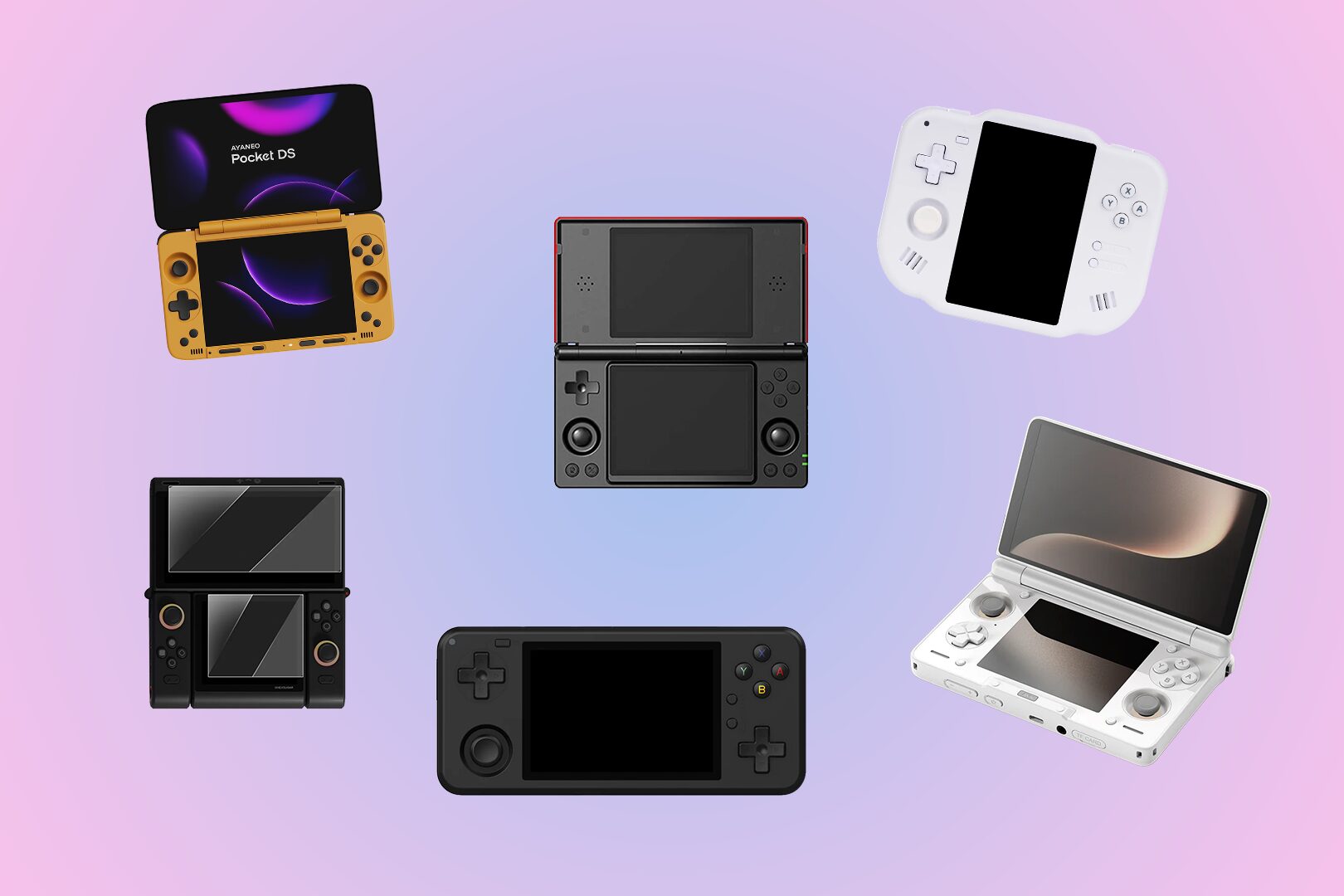
Six devices, six very different purposes. From a $51 arcade slab to a $760 experiment, here’s who each one is actually for.
The dual-screen handheld market went from nonexistent to crowded last year. What started as a niche gimmick has turned into a genuine product category, with manufacturers targeting everything from DS purists to people who want to run Switch games on an OLED while checking Discord on a second panel. Not all of these are clamshells, not all of them are even fully dual screen, and the price spread is enormous. Here’s what’s actually available as of early 2026, what each device does well, and who should care. If you happen to already own a dual screen handheld, check out our guide on the best apps for dual screen handhelds.
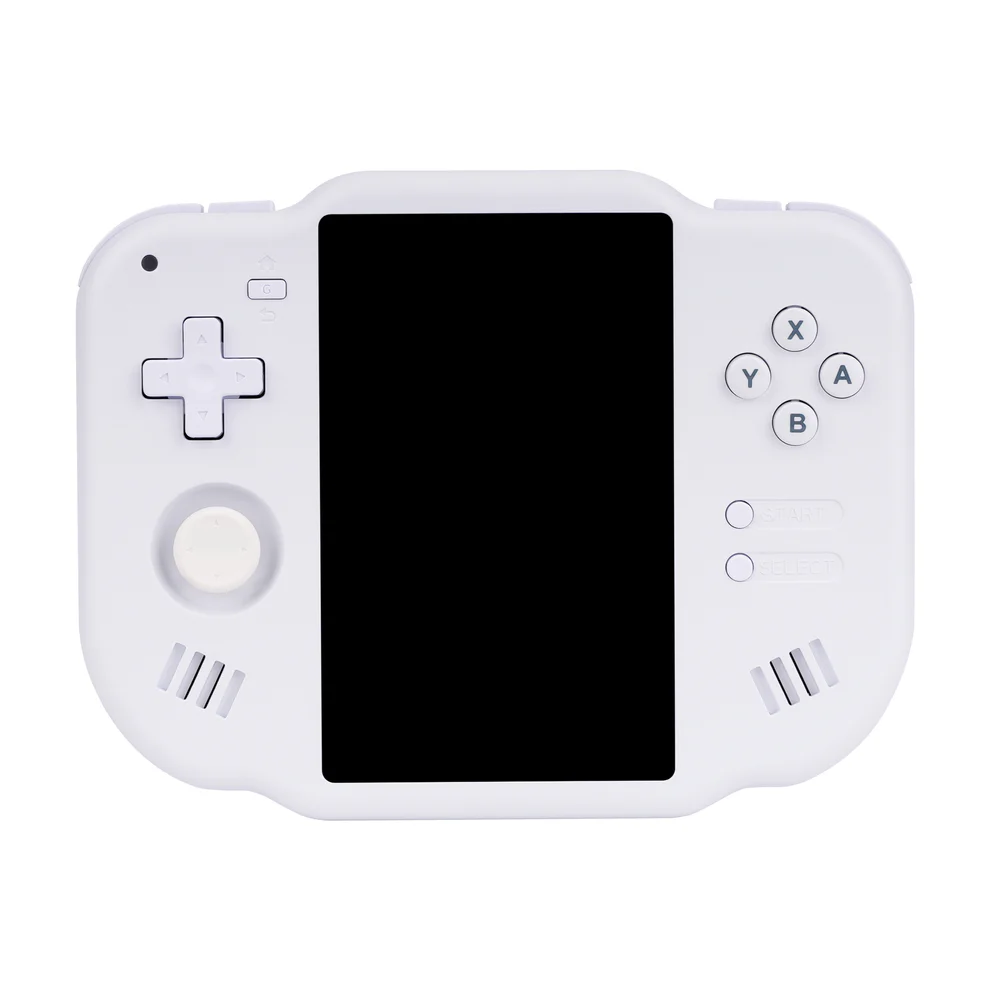
The Zero 40 is the cheapest way to play DS games in a vertical stacked layout. It's a single tall screen that emulators treat as two stacked panels, simulating the DS experience on a slab-style device. The base model is currently on sale for $51, which undercuts even the RG DS by nearly half.
The trade-offs are proportional to the price. The Allwinner A133P is a Cortex-A53 chip is firmly entry-level. DS games run near-perfectly because they're not demanding, and vertical arcade titles look great on the tall 4-inch panel. But N64 and Dreamcast struggle, and anything above that is off the table. The 480-pixel width means DS scaling lands at 1.875×, which isn't integer.
At 182g with no grips, it's light enough to feel insubstantial, but its unusual shape is actually quite functional for longer gaming sessions. It runs Android 10 (old, but functional for this purpose), and the Dawn Launcher comes pre-configured with RetroArch cores and TATE mode mappings. The DedicatedOS community firmware is well-regarded and smooths out some rough edges.
Who it's for: The tightest budget option for DS in a vaguely correct form factor. Good for casual DS play and excellent for vertical arcade games. Don't expect much beyond that — and consider waiting if the rumored successor materializes.
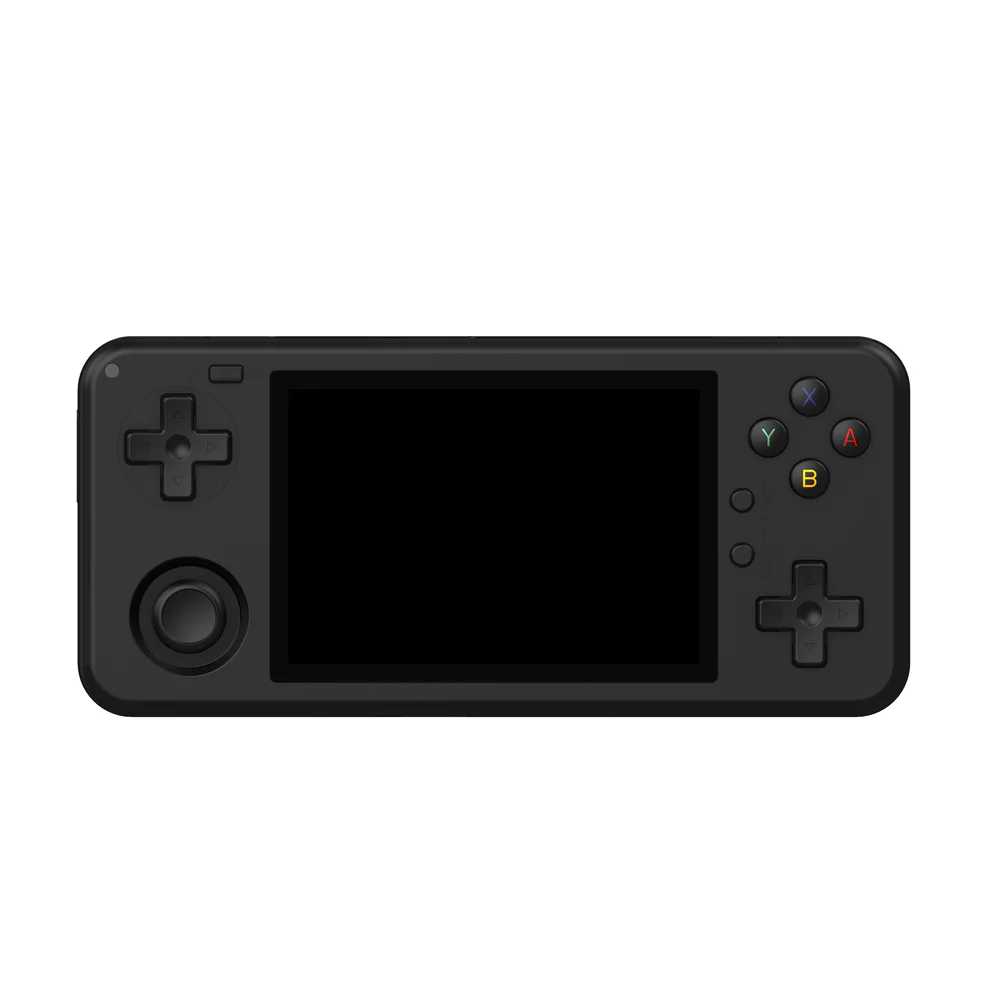
This isn't a dual-screen device, but it earns a spot in this guide because of how well it handles DS games in vertical mode — and because it does something no dual-screen device in this list can do: perfect integer-scaled GBA.
The 3.5-inch screen's 960×640 resolution is exactly 4× the Game Boy Advance's native output. No scaling artifacts, no shimmering, no blur. Just clean pixels. At 700 nits, it's also one of the brightest screens in the budget handheld space, making it actually usable outdoors — a claim most devices in this category can't honestly make.
The standout feature is the dual D-pad layout. Two physical D-pads plus a Hall Effect analog stick, designed so that when you rotate the device 90° for vertical (TATE) mode, the second D-pad becomes your primary input. MagicX even put dedicated TATE triggers on the edges. For vertical arcade shooters (like DoDonPachi, Strikers 1945, and Ikaruga) this is the best sub-$100 way to play them in proper orientation. It also handles DS games in a stacked vertical layout on the single tall screen, which works surprisingly well for titles that don't need touch input.
The Helio G85 handles everything through Dreamcast and light PSP without trouble, but PS2 and GameCube are mostly off the table. The Dawn Launcher is optimized for the dual-D-pad layout and includes quick rotation toggles. MagicX sells swappable shell and button kits for $5–$22, which is a nice touch for a device at this price.
Who it's for: GBA purists who care about perfect pixel scaling, vertical shmup fans, and anyone who wants a bright, pocketable retro device with unusually good battery life. Not a perfect DS replacement, but a strong complement.
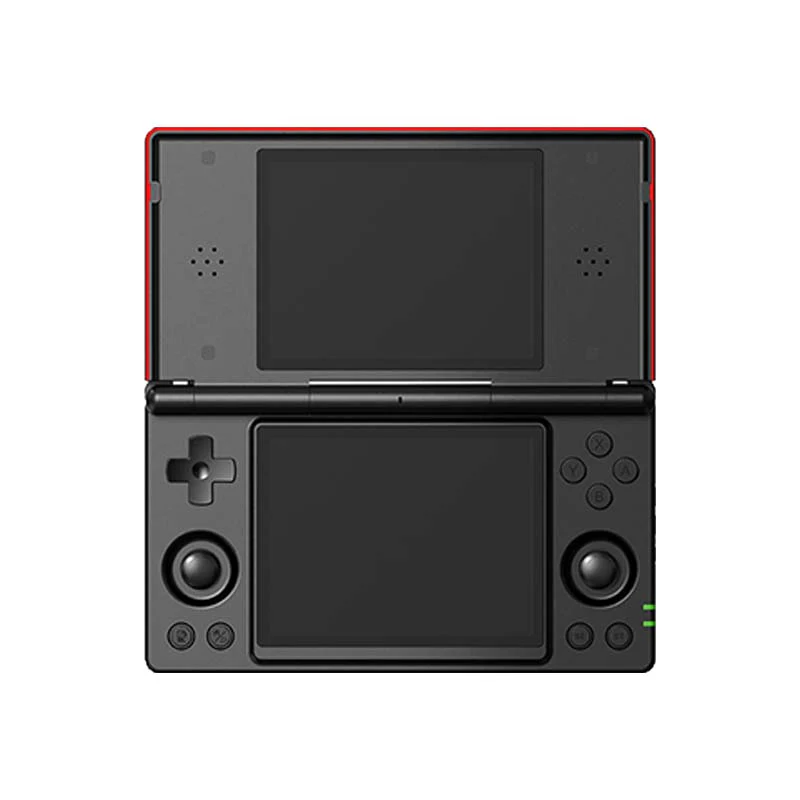
The RG DS exists because of a simple observation: playing DS games on a single widescreen, with the two displays jammed side-by-side, feels wrong. The clamshell form factor and stacked screens are half the experience, and Anbernic is the only manufacturer that figured out how to deliver that at under $100.
It had a rough launch. Buggy review firmware, misleading 3DS marketing, and a wave of negative coverage that stuck around long after the problems were patched. The device today, especially running GammaOS or Rocknix, is a different story. DS games run well through DraStic, most at 2x resolution. Everything from Game Boy through PS1 is comfortable. The screens are bright, the hinge is sturdy (stiffer than the original DS hardware), and the build quality is better than the price suggests.
The real limitations are genuine. Battery life tops out around 3-4 hours. The RK3568 is recycled from Anbernic's older lineup and can't touch 3DS emulation. The capacitive touchscreen makes stylus-heavy titles like Kirby Canvas Curse or Elite Beat Agents frustrating compared to the original's resistive panel. And there's no RetroAchievement support through DraStic, which is a dealbreaker for a vocal part of the community. The screens are 640×480, which means 2.5x the DS native resolution. Not a clean integer scale, so you're either stretching slightly or living with small borders.
But it's the only dual-screen device under $100. The next option up costs more than three times as much.
Who it's for: Someone who wants to play through the DS library in the correct form factor without spending $300+. Ideal as a dedicated DS and retro console companion device. Not for anyone who needs 3DS, RetroAchievements, or all-day battery life.
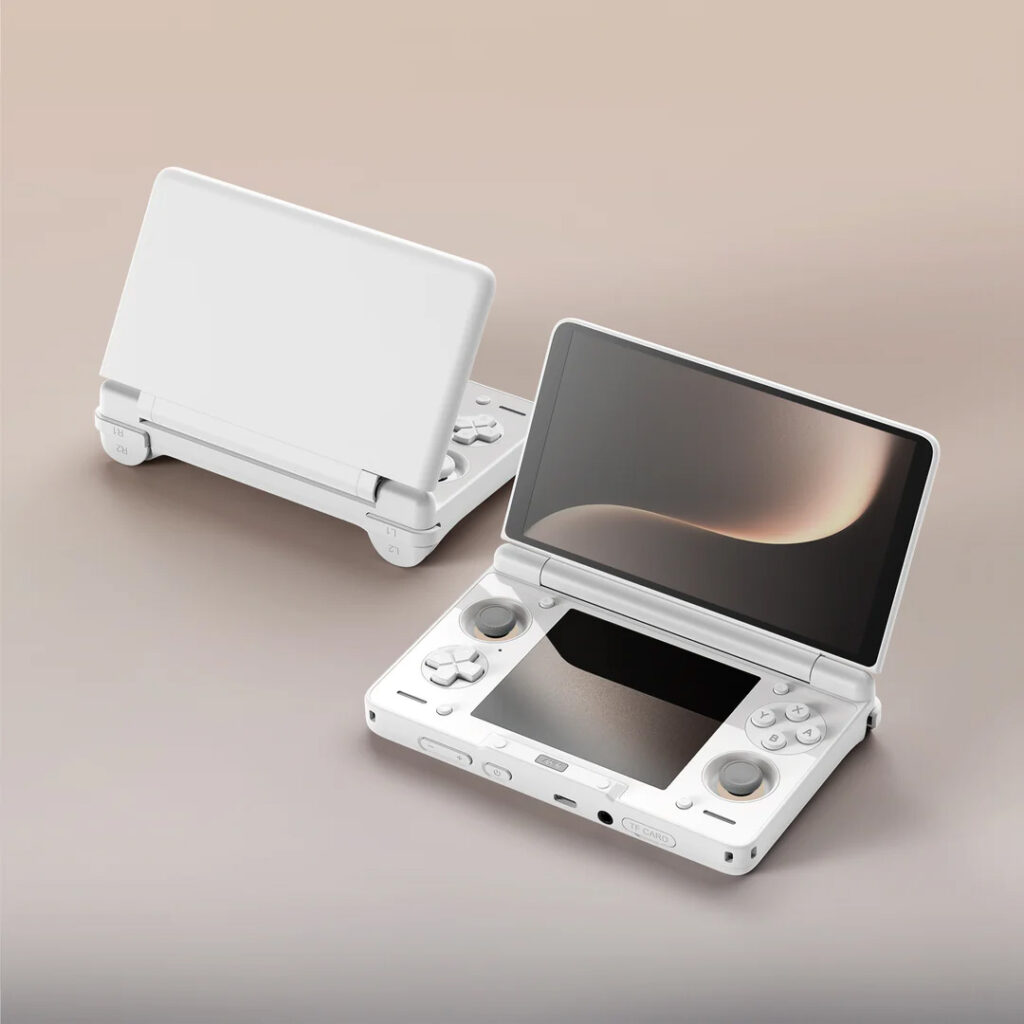
The Thor is the device people mean when they say "just get a Thor" in every RG DS thread, and in purely technical terms, they're not wrong. It's a dual-screen clamshell that handles 3DS at 3–4x resolution without issue, runs Switch titles at full speed, and does it all on matched AMOLED panels. The Snapdragon 8 Gen 2 (on the Base and above) has the headroom to make MelonDS viable by a wide margin, which opens up RetroAchievements for DS, something the RG DS simply can't do.
The problem is that AYN keeps raising prices. The Lite ($249, SD865) has been perpetually out of stock and may as well not exist. The Base went from $299 to $319 as of March 8, 2026. The Pro jumped to $399. The Max is now $489. These are DRAM-driven increases with more likely on the way. The value proposition that made the Thor exciting at announcement, dual AMOLED for $249, is evaporating. But even at a higher price this handheld still packs a massive punch.
There are also practical tradeoffs. The layout is cramped compared to AYN's own Odin 2, especially for larger hands. The analog sticks are recessed. A TPU grip ($15) is essentially mandatory for longer sessions. The hinge is premium-feeling but raises durability questions over time. And shipping is batch-based- You're not buying one off the shelf, you're joining a queue. Batch 4 ships in April.
If you can stomach the current pricing and the wait, the Thor might offer the most complete dual-screen emulation experience available. And it's the most powerful clamshell handheld in our big handheld performance ranking.
Who it's for: The enthusiast who wants 3DS emulation done right, with Switch as a bonus. The Base model ($319) is the sweet spot — the Pro and Max are overkill for most emulation use cases. Be aware of the batch shipping model and rising prices.
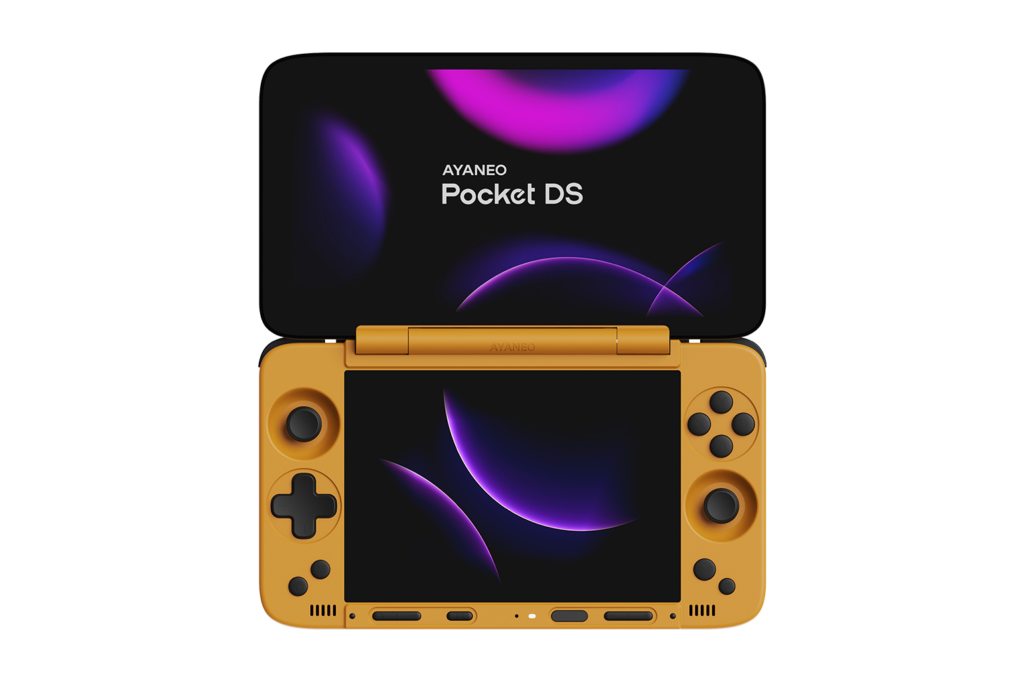
AYANEO's pitch is straightforward: the biggest screens, the best materials, the most power, and a price tag to match. The 7-inch 165Hz OLED top screen is genuinely stunning. 800 nits, deep blacks, the kind of panel that makes upscaled 3DS games look better than they ever did on original hardware. The 5-inch bottom LCD is considerably larger than the Thor's 3.92-inch panel, which gives touch-heavy DS games more usable screen real estate. CNC aluminum construction makes it feel more like a premium phone than a toy.
The catch is that the bottom screen is LCD, not OLED. Sitting right below that gorgeous top panel, the LCD's backlight bleed and shallower blacks are obvious, especially in dim lighting. Some early units had light bleed issues at the corners. It's a design compromise that keeps getting brought up in community discussions, and for good reason: on a device at this price, mixed display technologies feel like cutting a corner.
At 540g, it's nearly as heavy as a Steam Deck OLED and roughly 40% heavier than the Thor. The built-in rear grips help, and most reviewers find it more comfortable than the Thor's cramped layout despite the weight. But it's not a pocket device by any definition. The efficiency of the G3x Gen 2 should sustain performance better than the Thor's 8 Gen 2 during extended sessions.
AYANEO has its own baggage, though. Indiegogo backers from late 2025 are still waiting for units while retail channels already have stock, which hasn't gone over well. The right shoulder bumper has had sticking issues on some early batches. And the base price of $399 gets you only 8GB of RAM and 128GB of storage.
Who it's for: Collectors and enthusiasts who want the largest, most capable dual-screen device and don't mind the weight or the price. The best option if you intend to use GameNative for PC game emulation alongside retro. Not for anyone on a budget or who needs pocketability.
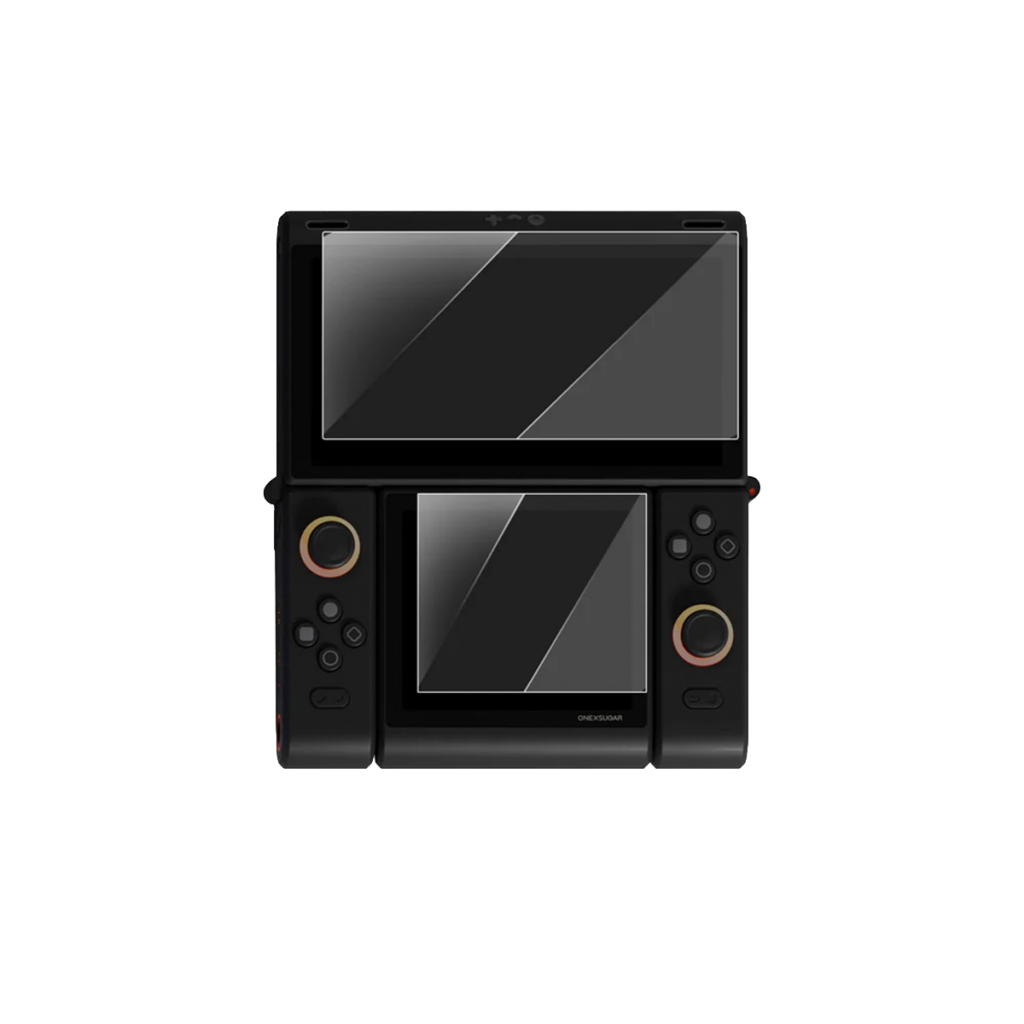
The Sugar 1 is the wildcard. It's not a traditional clamshell. It's a candy-bar slab with detachable, rotatable controllers and a secondary screen that flips out from behind the main panel. OneXPlayer calls it a "4-in-1" device: single-screen with side controllers, single-screen with bottom controllers, dual-screen with the small display below, or dual-screen with it above. In practice, the dual-screen DS-style mode and the standard single-screen mode are the two you'll actually use.
The hardware underneath is the newest in this roundup. The Snapdragon G3 Gen 3 is a step above the Thor's 8 Gen 2 and the AYANEO DS' G3x Gen 2, with notably better GameNative performance for running Windows games through translation. Both screens are OLED with matched color profiles, which gives it an edge over the Pocket DS's mixed OLED/LCD setup. The "Fusion Mode" that merges both panels into one tall display is a neat trick for vertical content.
The D-pad situation is the elephant in the room. To allow controller rotation, the D-pad is actually four individual buttons — like a Joy-Con — with a magnetic cover that snaps on top. Fighting game fans and platformer purists find it mushy and imprecise. The cover helps, but it doesn't fully solve the problem. And at 5600mAh with dual OLEDs and a Gen 3 chip, battery life during heavy emulation is genuinely poor — under 2 hours for PS2 or Switch-tier workloads.
Community testing also shows it throttles earlier than the Pocket DS in sustained loads, despite being more powerful on paper. The thinner chassis doesn't dissipate heat as effectively. It's a device that trades sustained performance for the newest silicon and the most novel form factor.
Who it's for: Tech enthusiasts and early adopters who want the most novel device in the room. The transforming form factor is genuinely unique, and the dual matched OLEDs look great. But the battery life is rough, the D-pad is a real compromise, and at $699+ you're in Steam Deck OLED territory. A device to admire more than to recommend broadly.
The Short Version
If you want DS games in the correct clamshell form factor and don't want to spend much: Anbernic RG DS ($95). If you want 3DS done properly and can handle the price: AYN Thor Base ($319). If you want the biggest screens and most raw power regardless of weight or cost: AYANEO Pocket DS. If you want the most novel piece of hardware: ONEXSUGAR Sugar 1, but know what you're getting into. If you want the best GBA experience and while also allowing for DS: MagicX One 35. If you want the cheapest possible way to play DS vertically: MagicX Zero 40.
The dual-screen space is moving fast. Several of these devices have firmware updates shipping monthly, prices are shifting due to component costs, and new competitors are being announced regularly. We'll keep this guide updated as things change.